L Bar Heat Sealer: How to Choose the Right Packaging Equipment

Packaging operations need sealing equipment that can produce consistent results without creating unnecessary bottlenecks. For businesses using shrink film around individual products or grouped items, an L-shaped sealing system can provide a practical way to create clean, enclosed packages before the shrink stage. However, not every operation has the same production volume, product dimensions, or automation requirements. Choosing the right L bar heat sealer means looking beyond the sealing mechanism and considering film compatibility, product size, operating speed, available floor space, and the level of automation required.
Match the Sealer to Your Production Volume
Production volume is one of the first factors to consider. A small operation processing limited quantities may benefit from a manual or entry-level hood system that gives operators direct control over each packaging cycle.
Higher-volume operations may require semi-automatic or fully automatic equipment. Current L-sealer systems are available across several configurations, including manual, motorized, semi-automatic, and fully automatic equipment. The available range allows businesses to select equipment based on their production requirements rather than forcing every application into the same operating model.
Consider Product Dimensions and Film Type
The size and shape of the products being packaged should directly influence equipment selection. Sealing areas, maximum product heights, film widths, and roll diameters vary between machine models.
Film compatibility is also important. Current systems support commonly used shrink films such as polyolefin (POF) and PVC, although specific thickness ranges depend on the model. For example, the LMC 5844-M supports POF and PVC films and has a 23-by-17-inch L-sealing area.
Before purchasing equipment, compare the machine's working dimensions with the largest products you expect to package regularly.
Decide How Much Automation You Need
Automation can affect both workflow and operator involvement. Manual systems provide hands-on control, while motorized and semi-automatic machines can simplify repetitive sealing tasks.
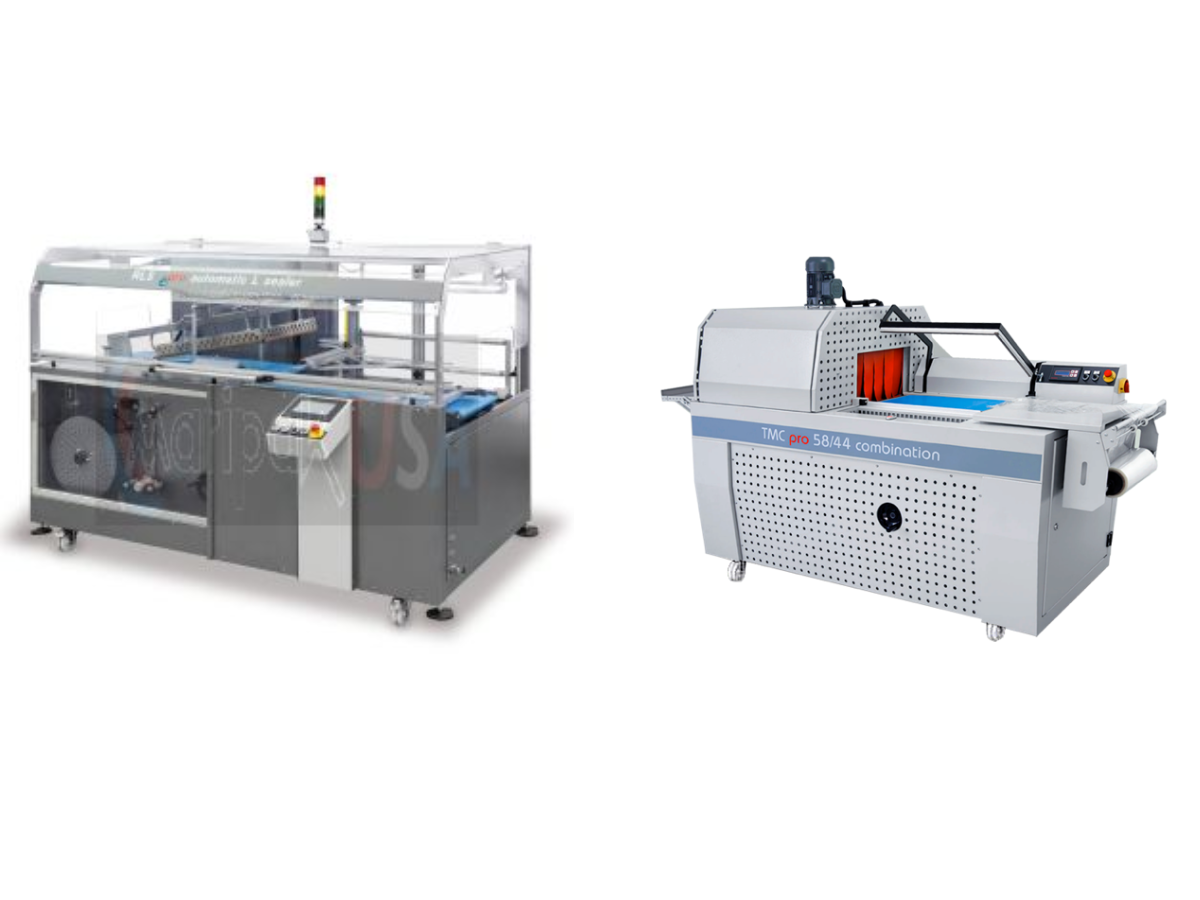
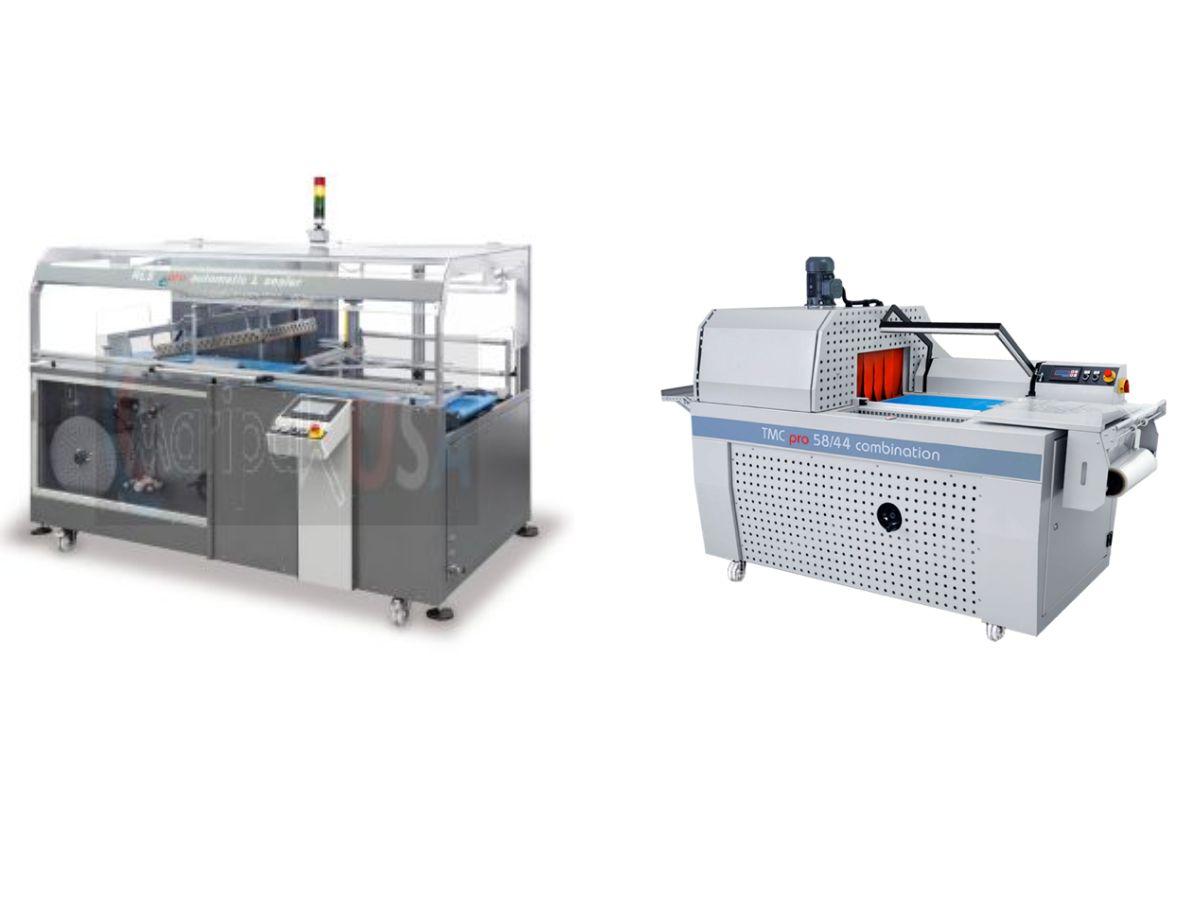
For example, the TMC Pro 5844-M uses a motorized sealing bar and can operate in automatic or free mode. It is designed for applications requiring regular production while maintaining a relatively compact footprint.
Businesses with more demanding production requirements can also consider fully automatic L-sealer systems. The RLS ePro series, for example, uses electrical servo motors and is intended for medium- to higher-volume applications.
Look at Space and Workflow Requirements
Floor space can become a significant consideration when adding packaging machinery. A machine that technically meets production requirements may still create workflow problems if operators cannot comfortably load products, access film, or move finished packages.
Compact hood systems can be useful for smaller operations where available space is limited. The Compack 5800i, for instance, combines sealing and shrinking in one chamber and is designed as a compact solution for small- to medium-volume packaging.
Consider the machine alongside your existing conveyors, worktables, film storage, and downstream equipment rather than evaluating its dimensions in isolation.
Evaluate Sealing Control and Maintenance
Consistent sealing depends on appropriate temperature control, dwell time, film settings, and machine condition. Modern systems may include digital temperature and timer controls, adjustable settings, and sealing systems designed to regulate heat more precisely.
Maintenance should also be part of the purchasing decision. Access to replacement parts, technical assistance, preventive maintenance guidance, and installation support can affect how easily equipment remains operational over its service life. The current L-sealer range includes technical and parts support, along with virtual installation assistance for applicable systems.
Conclusion
Selecting the right bar heat sealer requires a practical assessment of production volume, product dimensions, film requirements, automation, floor space, and ongoing maintenance needs. For companies evaluating industrial shrink packaging solutions, companies provide multiple L-sealer configurations and shrink wrap packaging designed for different production requirements. Comparing these factors before purchasing can help businesses choose equipment that fits their packaging workflow instead of creating new operational limitations.
Comments
Post a Comment